


Who may be considered?
- Those who want to lighten their natural tooth color in a controlled manner
- Eligible patients with coffee, tea, tobacco or age-related discoloration
- Those whose teeth and gum health are suitable for the procedure
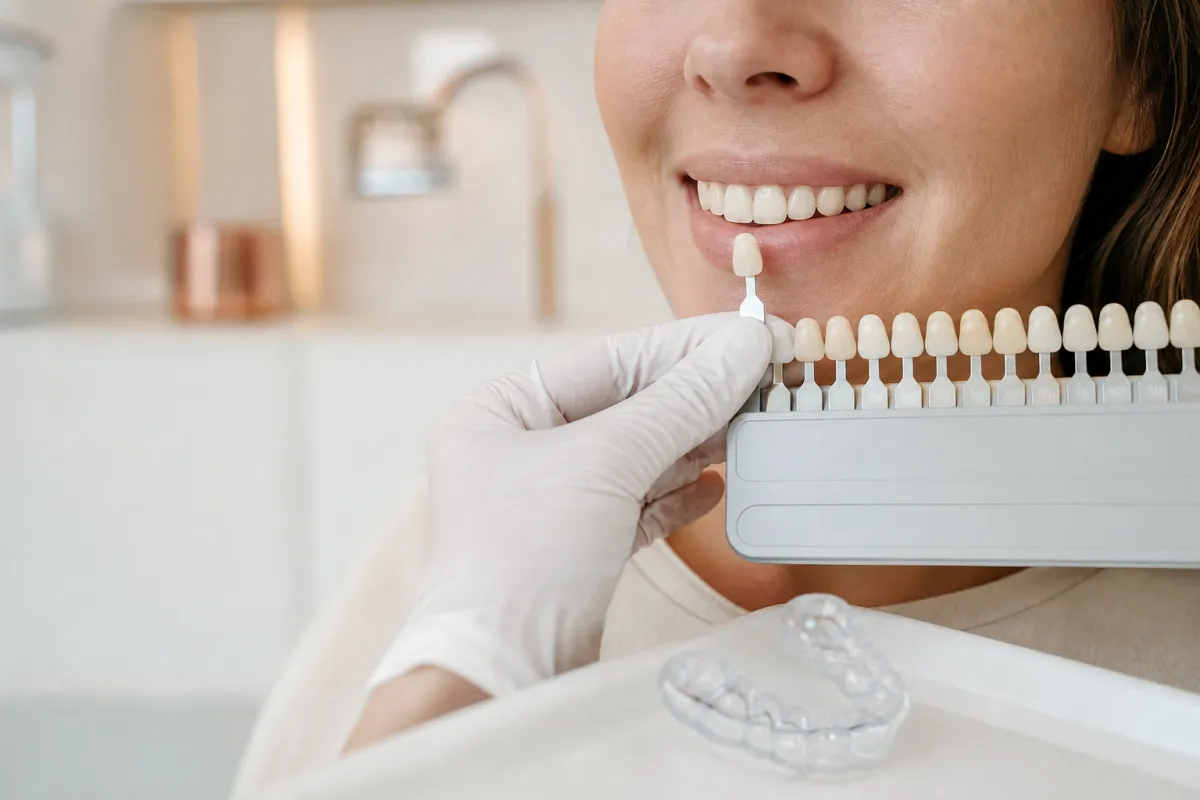
Controlled applications to lighten natural tooth color after evaluating tooth and gum health.
Book an appointmentTeeth whitening aims to lighten the discolorations in natural tooth tissue with appropriate whitening agents. Before the procedure, decay, cracks, sensitivity, gum disease and existing restorations are evaluated. Since the color of restorations such as fillings, crowns and veneers does not change with whitening, color harmony is also taken into consideration in aesthetic planning. The permanence of the tone and color that can be achieved varies from person to person.
Dental and gum examination and registration of existing restorations
Evaluation of starting color and expectation
Choosing office, home or combined method
Controlled application and precision tracking
Giving color control and care recommendations
In the first days, it may be recommended to limit intensely coloring foods and beverages, avoid tobacco products, and use products recommended for sensitivity.
The appropriate method is selected according to clinical findings and individual needs.
It is applied in a clinical environment with controlled concentration and duration.
It is applied with the custom tray prepared by the dentist and the protocol recommended.
In appropriate cases, office and home protocols are planned together.
Restorations do not whiten. If there is decay, crack, active gum disease or significant sensitivity, these should be evaluated first.
Professional cleaning can be considered for surface stains, and restorative options such as bonding or veneers can be considered for local color problems.
No. Whitening is effective on natural tooth tissue; The color of existing restorations does not change.
Temporary sensitivity may occur. Application time and method are regulated according to personal risks.